
Recipes: Gut Masala
Khichdi (Rice Lentil Porridge)
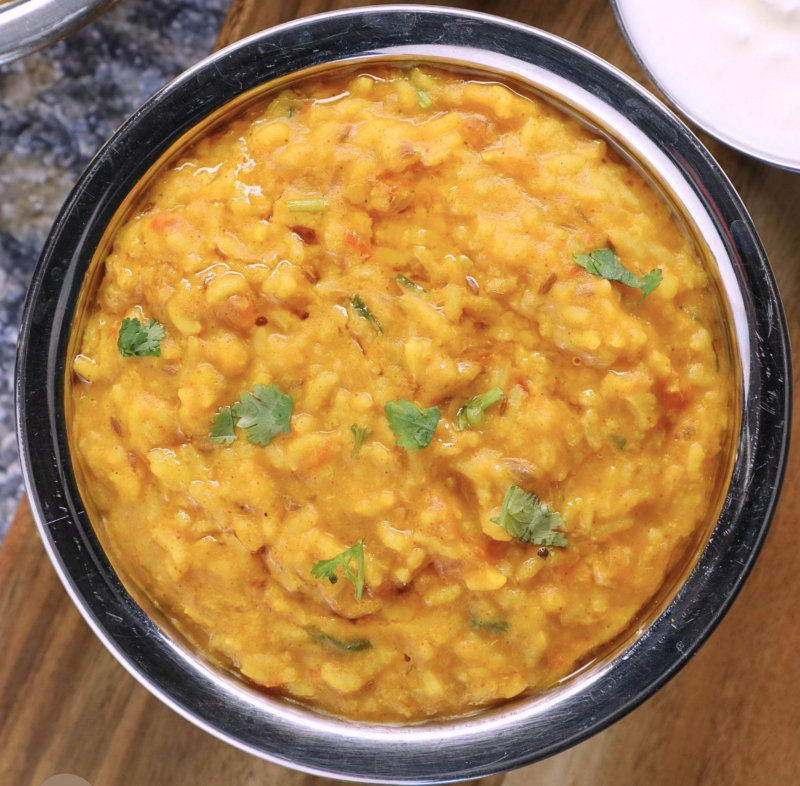
By: Chandershekhar Shori
Reviewed by: Shehnaz Bashir
Type of Cuisine: South Asian Cuisine
Cooking Time: 25 minutes
Storage Instructions: Can be cooled and stored in the fridge in a clean and dry airtight container for up to 2 days.
About this Recipe
Khichdi is one of the first foods introduced to children of South Asian origin when starting solids. It is a savoury porridge made with lentils and rice that is cooked until very soft. It is considered easy to digest and soothing. There are many versions of khichdi across South Asia, with minor variations and changes.
In Chandershekhar’s words,
Growing up with Crohn’s disease, khichdi was often one of the few foods I could tolerate during a flare, so it became a comforting constant during some of my hardest days. It still reminds me of home, my family’s care, and how much a simple, familiar meal can mean when you are struggling.
Ingredients
- 1 cup rice (any type)
- ½ cup moong dal/lentils
- ¼ teaspoon turmeric
- 1 teaspoon salt
- ¼ teaspoon black pepper
- 1 teaspoon clarified butter
- 4 cups water
- 1 teaspoon oil
Instructions
- Wash rice & moog dal/lentils in water 3-4 times.
- Drain and transfer them to pressure cooker (3-5 liter capacity).
- Add turmeric powder, oil, water, and salt. Mix well and taste the water for salt; add more if required.
- Close the lid of pressure cooker and cook for 4 whistles (1st whistle on high flame and remaining 3 whistles on medium flame).
- Turn off the flame and let the steam pressure come down naturally. It will take around 8-10 minutes. If you do not wait and open the lid immediately, the khichdi may remain uncooked.
- Carefully open the lid, add ghee, and mix well. Moong Dal Khichdi is ready.
Notes from Dietitian Shehnaz Bashir
This recipe tends to be easier on the stomach because rice (particularly any white rice) is easily digestible for most people with GI symptoms, especially when freshly made. It is a good option if
- gut symptoms are causing nausea
- you are feeling anxious about trialing foods with herbs and spices after a period of being on a restrictive diet and/or after surgery
Moong daal may cause bloating and wind/or increase urgency. To reduce this, you can consider cooking the moong daal separately from the rice, drain the water it is cooked in then stir the dal into the rice. This will remove some of the difficult to digest carbohydrates. You can also reduce the amount of daal – to ¼ instead. You can also add ginger and/or asafoetida to help reduce any gas.
It is also important to remember rice has cooled down and reheated, some of its easily digestible starches turn into resistant starch which acts like dietary fibre. While the resistant starch acts like a prebiotic and nourishes your gut microbiome, for some people, it may cause digestive discomfort. Please bear this in mind if you are trying to understand your symptoms and fluctuations when the foods eaten are the same.
In general, this is a very good recipe for those wanting to slowly increase more fibre into their diet without having too much – essentially easing the tolerance of the gut to manage fibre.
Note: We have provided general recommendations for adaptations and modifications that may make some of these recipes easier to digest. However, we note that diet is highly individualized and we strongly encourage you to work with your registered dietitian and/or your GI team to ensure that these recipes work for you.