
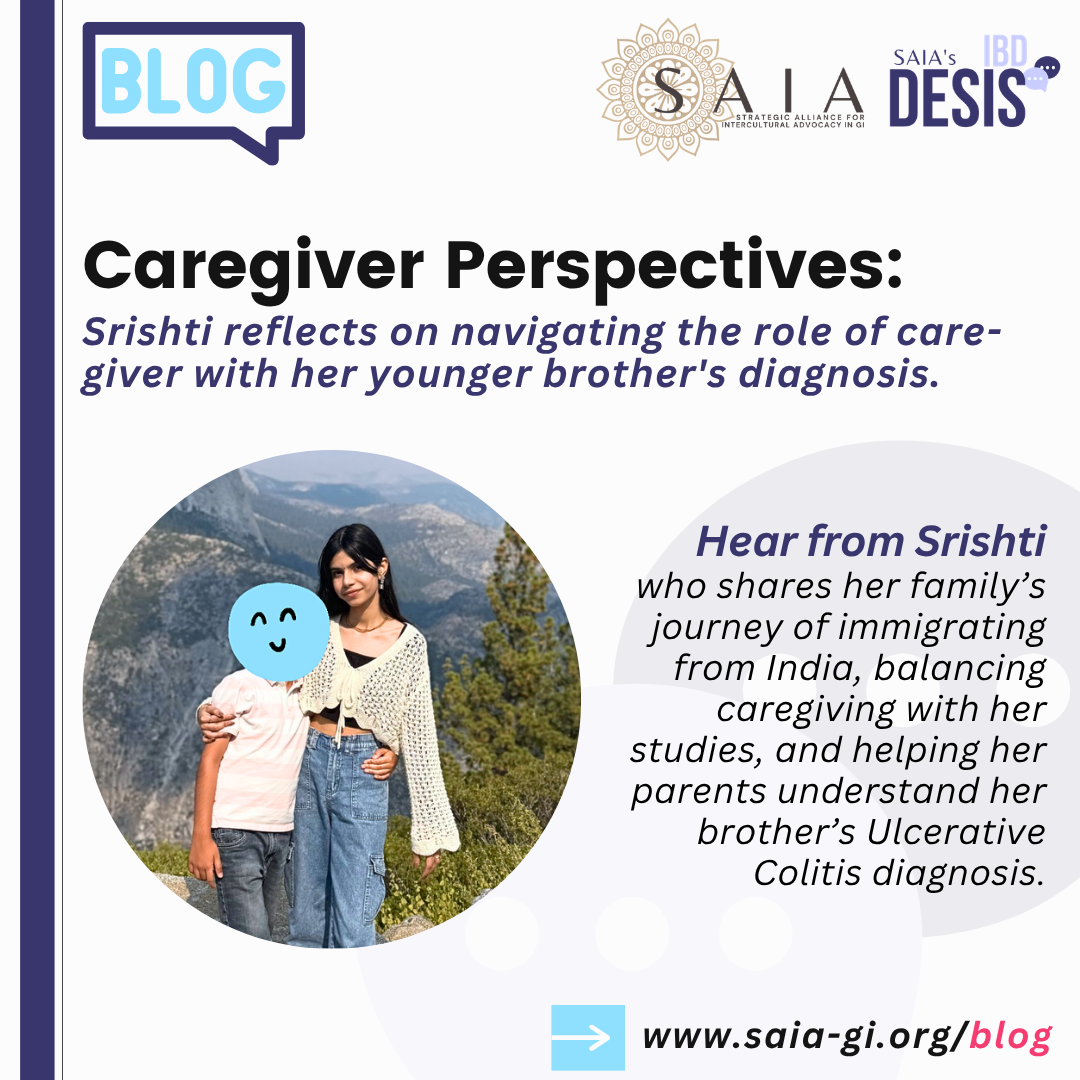
We come from a town in Haryana, India, where words like “Ulcerative Colitis”, “Crohn’s Disease” or “IBD” simply don’t exist in our everyday lives. Growing up, the only stomach issues we ever heard of were simple stomach infections that came and went. If someone got sick, had diarrhea, or noticed little blood in their stool, they would visit the local doctor, take a short course of antibiotics or other medication, and move on with their lives. It was always seen as something temporary, something that could be treated and cured.
But everything changed when my little brother got sick. It felt like everything we thought we knew about stomach issues was wrong.
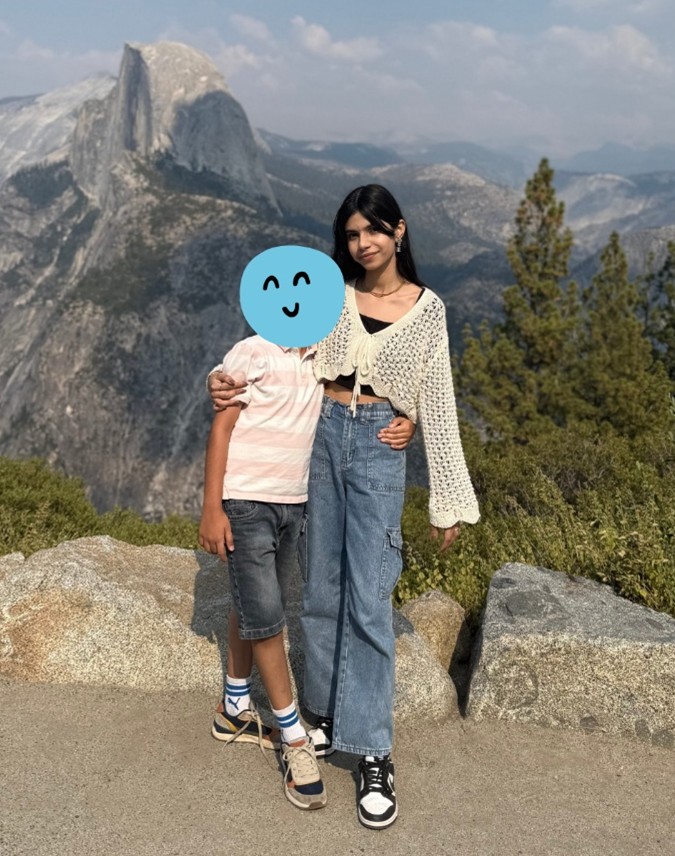
My name is Srishti, and I am a proud elder sister and caregiver to my little brother with Ulcerative Colitis. Our family moved to the United States when he was just two years old. For a few years, we were just a normal household, but everything changed when he turned 7 and started showing symptoms. What started as just one day of symptoms quickly turned into constant urgency and frequent trips to the bathroom. These symptoms were completely new to us, and no antibiotics were fixing them.
MYTH AND DIAGNOSIS:
When his doctor finally told us the diagnosis of Ulcerative Colitis, my family and I entered a state of confusion and hidden guilt. My mom immediately started searching for a tangible cause. Did we do something wrong? Was it because we moved to the United States? Was it the food that he had just started eating at school? These questions kept circling in our minds constantly.
In the South Asian community, there is a big cultural myth that Western lifestyles or “outside food” cause these gut issues and chronic conditions. Because none of our extended family back home had ever heard of this condition, my mom naturally assumed it was an environmental curse of our new home. This is an unfair blame game, and I am sure many families go through it as they navigate their child’s diagnosis. In reality, we should consider that multiple factors beyond our control can lead to the onset of this disease.
As the eldest daughter and sister, I stepped in not just as a translator of language, but also as a translator of science. I had to explain to my parents that this wasn’t a simple stomach infection caused by food or a virus, but it was something far more complex. 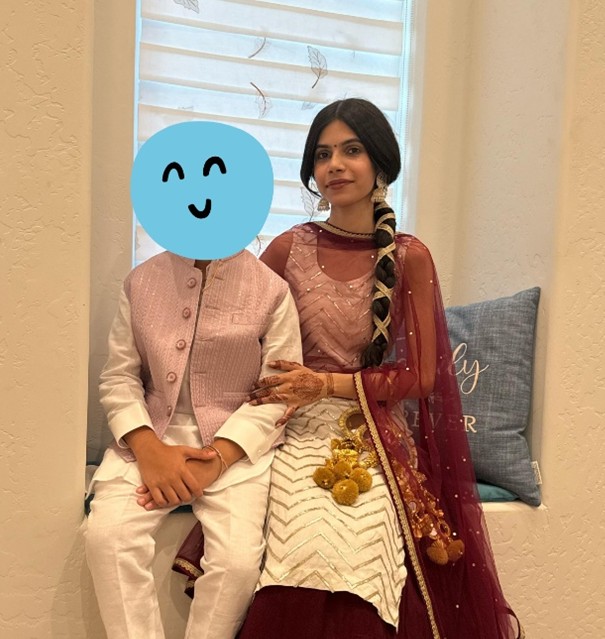 I used a simple analogy to explain this to them: his immune system, which usually gets activated by a virus or bacteria and uses its defense mechanisms to destroy it, has now accidentally activated without any virus or bacteria. It now thinks his colon cells are the virus/invaders and has started attacking its own cells. No short course of medication can switch off this response permanently.
CAREGIVER TIP: Remove the blame first!
If you are a parent or caregiver navigating a new diagnosis in a traditional household, the first step is to remove the blame. I realized quickly that I couldn’t focus on helping my brother heal if my parents were stuck in this cycle of guilt. I had to repeatedly remind them: We did not cause this. The school lunch did not cause this. It wasn’t the move to the United States. Many children move abroad and eat the same foods without developing IBD.
NAVIGATING HEALTHCARE IN A MEDICALLY UNDERSERVED AREA:
We currently live in Fresno, California, a medically underserved area. For families living in regions like ours, resources are stretched thin. If a new patient needs to see a pediatric specialist like a gastroenterologist (GI), the waitlist can easily be 2-4 agonizing months.
In our case, we got really lucky. Before my brother’s symptoms worsened, his pediatrician had already referred him to a GI for constipation issues. Because of that early referral, we were able to bypass the massive waiting list when his condition suddenly escalated. Our experience taught me that being proactive in underserved areas isn’t a choice, it’s a survival mechanism.
About a year into my brother’s diagnosis, his care required an even higher level of specialization, moving his care to Oakland, CA. Suddenly, managing his care was no longer a short drive down the street. It meant waking up before dawn for a 3 hour drive each way from Fresno to the Bay Area for his appointments.
At the time, I had just started my first year as a pre-med student, already balancing a demanding schedule. But when it comes to your little brother, you don’t think twice. You just do what needs to be done. Between classes, I learned to navigate patient portals so that I could keep track of his lab results and keep my parents reassured. Throughout all of this, my main goal was to ensure my brother received the best possible care.
EMPOWERING A LITTLE KID IN A BIG MEDICAL WORLD
At the end of the day, behind all the medical jargon and appointments, my brother was still just a 7-year-old boy trying to enjoy school and make friends. He didn’t understand what an autoimmune disease meant. 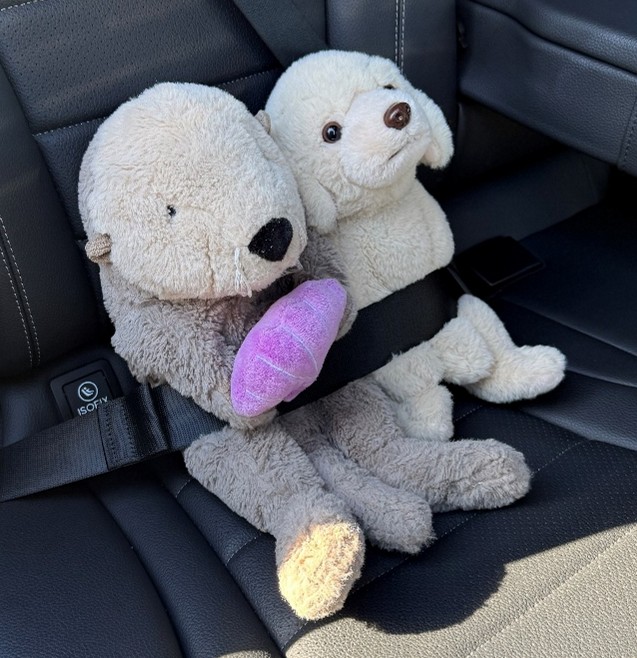 All he knew was that he wanted to try the snacks his classmates were eating, run around at recess, and do everything the other kids were doing. I had the privilege to be the kid who ate anything she wanted but I watched my brother struggle and often times feel scared to try anything new. For a pediatric patient, the emotional toll of feeling “different” can be just heavy as the physical symptoms.
To help him understand his condition without scaring him, I had to get creative. I bought him an Ulcerative Colitis story book so he could see characters that looked just like him to show him that he wasn’t alone. I also tried to normalize his experience by reminding him that having UC is the same as some of his friends having diabetes or other chronic conditions. It’s just how our bodies function sometimes, and it doesn’t make us any less.
Because kids naturally associate celebrations and rewards with food, we had to shift his mindset to something else. Instead of using sweet treats as rewards, we started using playful non-food incentives like giving him extra game time, toys, or fun activities. It helped him feel excited about reaching a milestone without putting stress on his gut.
CAREGIVER TIP: Try to feed their minds and not just their illness!
A child with IBD needs to know that they are more than a diagnosis.
Find creative ways to explain their health using age-appropriate tools. Shift focus away from what they can’t do or eat and instead celebrate what they can do. Normalizing this condition early can help prevent them from carrying a sense of shame when they are alone in the outside world.
BUILDING THE SCHOOL VILLAGE!
Managing pediatric IBD doesn’t stop at the clinic or at home, it follows them into their classrooms. School support plays a very crucial role in making sure a child feels safe and supported. As my brother’s advocate, I make it a priority to remain closely connected with his teachers, administrative staff, and school nurses. After his diagnosis, my priority was to ensure that when he’s back at school, his teachers and staff around him understood the condition and that bathroom breaks are an urgent medical need – not an excuse to skip class.
We are incredibly blessed with school nurses who are absolutely wonderful. They didn’t just look out for my brother, but one of them became a source of support for me as well. On days when the anxiety of balancing my academics and his health felt challenging, knowing he had compassionate professionals watching over him at school gave me the peace of mind I desperately needed.
CONCLUSION:
We started this journey from a town in India, completely blind to a disease that would eventually redefine the logistics of our household. 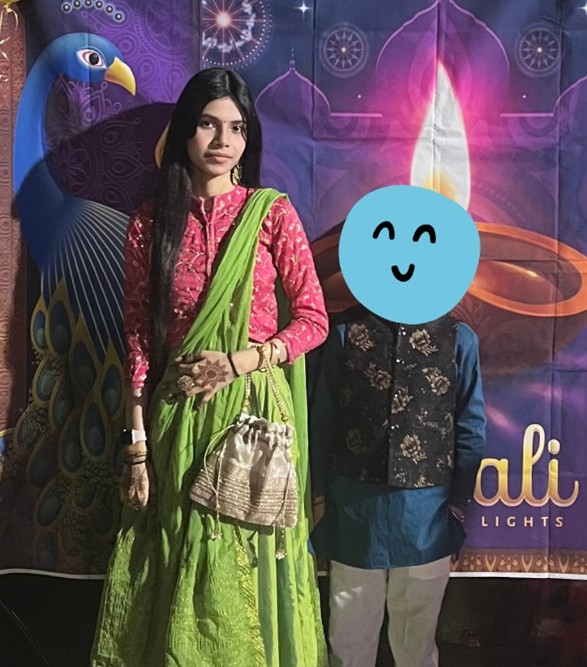 We have driven and are continuing to drive miles to get his care, tackling the confusing maze of authorizations, and are still learning how to make my brother feel normal despite his condition. Managing UC is not a task for one person; it requires support from entire family. My mom and dad have been our pillars, standing by us. While I cared for my brother, they cared for both of us. As we work towards my brother’s recovery, I can’t imagine facing this without my parents’ unconditional support.
To all the caregivers and elder siblings reading this: Remember, you are not alone, and you didn’t cause any of this. By taking proactive steps, learning more about this condition, and replacing cultural blame with heartfelt acceptance, you can help create a brighter, less stressful life for your young warriors. We’re all in this journey together, and I’m really excited to be part of SAIA’s IBDesis to hear from others as we navigate this!